Showing posts with label Nutrition. Show all posts

Monday, June 1, 2015

The World's Best Spice Guide!

Spices are amazingly powerful! 


When used correctly, they can bring out hidden and complex flavors, and breathe new life into a favorite dish. 

They're also packed with nutrition

Did you know that: 
  • Ginger, cloves and tumeric are anti-inflammatory
  • Coriander is a great source of fiber, iron and magnesium
  • Cinnamon can help manage glucose levels people with Type II Diabetese

Knowing how to uses spices is the key to unlocking their hidden health potential. 

Here's the most helpful cheat sheet I've seen to help figure out the best spice pairings, and to learn the qualities and flavors each spice can bring to the table. Did I mention it's free?

Get the full-sized guide here for free!

Amazing, right? 

For more handy kitchen guides, check out Cooksmarts! It's a fantastic website that can help with meal planning, recipes, kitchen tools and more. 

You'll be a spice guru in no time! 

Monday, April 1, 2013

7 Minute Bean Mix: The most delicious and nutritious meal you can whip together in minutes!


This Bean Mix is so tasty, it will knock your socks off! There are very few ingredients, it’s packed with flavor, and you’ll get your protein fix…all in less than 7 minutes!

Eat it hot or cold, sprinkle it on top of a salad, pair it with some guacamole and roll it into a burrito, or blend it into a dip! There are so many variations, you’ll never be bored.  

Need more reasons to give this recipe a go? Well, for a deceptively simple recipe it’s a nutritional powerhouse! One cup of black beans will provide you with 30% of your daily protein, 60% of your daily fiber, as well as a boost of B2, B9, Iron, Magnesium and Manganese. The green chilies and lime juice are loaded with Vitamin C. Cayenne is a powerful antioxidant and is highly anti-inflammatory. One tablespoon of chili powder has almost 50% of your daily Vitamin A.

Are you still reading this, or are you rushing to the kitchen?


7 Minute Bean Mix Recipe

2 (14 oz) cans of beans, rinsed and drained  (Red, Black, White….use what you’ve got!)
1 (4 oz) can of diced green chilies, drained
2-3 cloves garlic, minced
1/2 onion, diced
2 green onions, diced
1 tbs apple cider vinegar
1 tbs lime juice
2 tsp chili powder
½ -1 tsp cayenne (depending on how spicy you’d like it)
1 tsp salt

Over medium heat, saute onion and garlic in a little bit of olive oil for about 5 minutes, or until onion is clear.

Mix in the rest of the ingredients and set heat to low. You're done!

Enjoy this delicious meal, your taste buds and your body will thank you! 

Wednesday, March 27, 2013

Can B Vitamins help to prevent Autism?


When we last left off, we examined the importance of the B Vitamins and the best ways to work them into our diets. Some time later, I received an email from a fellow Health Adventurer with some interesting questions and a link to some recent, and somewhat controversial, autism research. The study in question followed more than 85,000 children over the course of 10 years, with the hope of finding a connection between a pregnant mother’s folic acid intake and the risk of her baby developing one of the Autism spectrum disorders. In this brief article, we’ll learn a little bit about the Autism disorders, we’ll examine what this latest research study found, and we’ll discuss how you and your loved ones can use this information.


Autism Explained


Autism Spectrum Disorder, or ASD, is an umbrella term for several developmental disorders that, according to the most recent studies, affect 1 out of every 88 children in the United States. Usually diagnosed at an early age, children with ASD commonly display communication deficits, socialization issues and specific types of repetitive behavior. It’s possible they will also exhibit cognitive deficits, although this isn’t always the case.


There is a large amount of research going on to try to pinpoint the reason that ASD is so prevalent in society today. It seems as if there are a variety of contributing factors, including diet, nutrition, genetics, mother’s health and medication use during pregnancy, and age of the parents during conception that may affect whether or not a child will develop ASD.


A New Study, a New Hope?

The study in question, published in February of this year in the Journal of the American Medical Association, followed over 85,000 children from 2002 to 2008. In this particular case, researches were paying special attention to an expectant mother's B9 (Folic Acid) intake. As we already know, adequate levels of B9 in expectant mothers have been found to prevent subsequent birth defects. These researches wanted to see if taking B9 at key points during pregnancy, specifically between the 4th and 8th weeks, affected a baby’s chances of developing ASD.

Out of those 85,000 children, 270 were eventually diagnosed with ASD. When they took a closer look at the mother’s exposure to B9 at that critical time during pregnancy, they found 64 children out of 61,000 mothers who had taken B9 were later diagnosed with ASD, compared to 50 children from 24,000 mothers who had not taken B9 at that time. If you crunch those numbers, it turns out that the mothers from the B9 group had fewer children diagnosed with ASD than mothers who had inadequate B9. Their conclusion was that exposure to B9 near the time of conception seems to be associated with a lower risk of the baby later developing ASD.

So, What Does This Mean?

It’s important to note that, while fewer babies from the B9 mother group developed ASD, there were still some that did. Why is this the case? As we discussed earlier, there are still too many factors that may potentially contribute to a baby developing ASD. While there is progress being made, researchers cannot yet definitively point to B9 as a true cause, let alone the only cause. They still, ultimately, do not understand why a child will develop ASD. I know...it’s complicated and frustrating for them, too. They can, at least, use this information to further support the case for prenatal supplementation.

As the amount of information from different studies continues to grow, researchers have begun to notice trends which may increase the risk of a child developing ASD. While it’s no guarantee, avoiding certain risks is a great way to help improve the odds of producing a healthy baby. The pregnant mother’s age, diet, general health status, (obesity, diabetes) habits, (cigarette smoking) and medication use during pregnancy (especially psychiatric medication) have all been labeled as risk factors for an ASD diagnosis for the baby. The father’s age, genetic predisposition and health status during conception have also been looked to as increased risk factors.  

The Bottom Line

If parents try to lead a healthy lifestyle and avoid as many of these risks as possible, they’ll have the best chances of creating a healthy and happy child. Seems like an over-simplification of the issue, you say? Perhaps; but until we know more, it’s one of the only definitive, and the most honest, response resembling an answer you can hope to get.

Friday, March 22, 2013

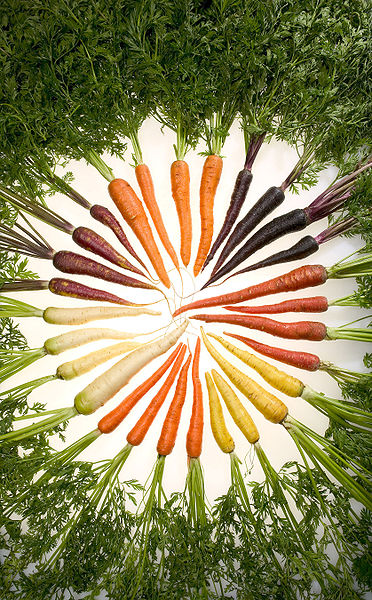
What's up with these carrots, Doc?


File this fact for a future trivia night: Carrots can be orange, yellow, white, red or purple! Crunchy and colorful, they’re also a great source of fiber, potassium, and Vitamins A, C, and K. Saute some up for a scrumptious side dish or dip ‘em in some tasty hummus for a delicious and filling snack. 

Thursday, March 21, 2013

Sesame Snackballs: The no-bake, protein-packed wonder-snack!


Looking for a snack that is unbelievably easy to maketravels well, is packed with protein (and fibers and minerals...) AND tastes great

Look no further: May I introduce you to Sesame Snackballs!


Sesame seeds are a nutritional secret weapon. Not only are they a good source of protein and fiber, but they’re also a great source of calcium, manganese, magnesium, and loads of other minerals.

Sesame seeds! Who knew?

When you pair up sesame seeds with the protein punch that peanut butter (and almond butter!) packs, you’ve got a snack that will give you an extra energy boost and will keep you full for hours. Bring them to work or school to fight off the mid-day sleepies, or eat them before/after a workout, or or...well, the possibilities are endless! 

Did I mention this recipe is no-bake? What are you waiting for?!


Sesame Snackballs: (makes ~24 balls)

Ingredients:
2 cups sesame seeds
1/2 cup sunflower seeds
1.5 cups shredded coconut
1/2 cup agave
1/4 cup peanut butter
1/4 cup almond butter (or just add more peanut butter)
1 tbs vanilla extract
1/2 tsp ground cinnamon
1/4 tsp salt


Directions:
- Stir together sesame seeds, sunflower seeds, and shredded coconut in a large bowl
- In a smaller bowl, mix together agave, almond butter, peanut butter, vanilla, cinnamon and salt. Mix well!
- Add the contents of two bowls together and mix them very well.
- Use hands to form into balls. 
- Place them on a baking sheet covered with wax paper.
- Refrigerate or freeze for at least 30 minutes. 
- Keep them in the fridge for up to a week, or in the freezer as long as you’d like. You can pop them right into your mouth from the freezer!

(I can't find the source for the original recipe...I'll be sure to credit it as soon as I find it!)

Monday, January 28, 2013

The Official “B” Cheat Sheet: Your Guide To Understanding B-Vitamins


We've all heard of B vitamins. We know that they’re important, and that we need them to stay healthy. But what exactly do they do for us? How much of each vitamin do we need each day? Most importantly, what’s the best (and, ahem, the easiest) way to work them into our diets?


Here are the keys to decoding these B’s

If we understand the roles they play in our bodies, it becomes easier to see why not getting enough of them every day will result in certain problems. As a group, the B’s work together to keep the cells in our bodies healthy – this goes for the skin, blood, and nerve cells. What does this mean for you? Well, if you are lacking in the B department, you’ll develop problems with the skin (rashes, acne) blood (anemia) and nervous system (numbness/tingling, altered brain function, birth defects). 

The B’s also work together to keep homocysteine levels in check. Homocysteine is an amino acid found in the blood that is broken down by the B vitamins. Research is still being done on the long-term effects on the body, but many studies have found a connection between high levels of homocysteine and an increased risk of heart disease, Alzheimer’s disease, and bone fractures.

If that weren't enough, B’s play an essential role in turning the foods we eat into the energy we use every day, a process called metabolism. I’ll discuss metabolism in more detail in a later post.

Several simple sources of B-Vitamin Goodness

Ok, so now that we understand why these B’s are so important to us, which foods can we eat to give us our Vitamin B fix?  Different meats such as liver, beef, and fish are great sources of some of the harder-to-find B’s such as B5 and B12. Other good sources of B vitamins include: nuts, seeds, eggs, dairy products, mushrooms, whole grains, beans and leafy greens. B7 is a particularly difficult vitamin to find in generous amounts in food, but you'll find it in eggs, chard, peanuts and liver.

Fair enough, but how much do I need?

It can be tricky to make sure we’re getting enough of our B vitamins in our daily diet to stay healthy. Because of this, you may want to supplement with a multi-vitamin. Something important to remember: People who have restricted intake of certain foods as a result of vegetarian or vegan diets, or who are already managing certain conditions that deplete the B's in our body, may also need to supplement with whichever B they are lacking. Certain medications and even your age may also affect how well you can break down and use your B vitamins. Before starting any supplementation routine, please see your Doctor to make sure you take exactly what you need for your specific nutritional needs. Just like anything in life, too little OR too much of something can lead to problems.

Get to the good stuff!

Good news! I've compiled a nifty cheat sheet for you to use at home to help keep these B’s straight. Each section provides a mini-breakdown on how much of each B you need every day, what will happen if you’re not sneaking enough into your diet, and the foods that provide the highest B-bang for your buck.

 “But we are a practical group!” you cry out. “We demand recipes!” To reward your enthusiasm, I've included examples of meals packed to the brim with beautiful B’s at the end of this post.


B1


Thiamine

How much do I need: 1.5 g per day
What if I don’t get enough: Altered brain function! Emotional disturbances! Weakness/pain in limbs! Irregular heartbeat! (Rare: Beriberi disease!)
Where can I get it: sunflower seeds, macadamia nuts, pecans, pork, fish, cauliflower, eggs, kale


B2


Riboflavin

How much do I need: 1.2 mg per day
What if I don’t get enough: Cracked lips! Inflamed tongue! Skin disorders!
Where can I get it: milk, cheese, mushrooms, almond, dark leafy veggies


B3


Niacin

How much do I need: 14-16 mg per day
What if I don’t get enough: Insomnia! Skin disorders! Diarrhea! Dementia! (Rare: Pellagra disease!) 
Where can I get it: chicken, beef, mushrooms, peanut butter, legumes


B5


Pantothenic Acid

How much do I need: 5 mg
What if I don’t get enough: Acne! Nerve dysfunction!
Where can I get it: meat, whole grains, broccoli, avocado


B6


Pyridoxine

How much do I need: 1.5 mg
What if I don’t get enough: Anemia! Rashes! Depression! High blood pressure!
Where can I get it: grains, nuts, potatoes, starchy veggies


B7


Biotin

How much do I need: 30 micrograms
What if I don’t get enough: Thinning of hair! Rashes! Depression! Tingling in arms/legs!
Where can I get it: leafy greens, peanuts, eggs


B9


Folic Acid/Folate

How much do I need: 400 micrograms
What if I don’t get enough: Depression! Anemia! Birth Defects!
Where can I get it: leafy greens, beans, lentils, sunflower seeds


B12


Cobalamin

How much do I need: 2.4 micrograms
What if I don’t get enough: Anemia! Depression! Constipation! Memory loss! Nerve dysfunction!
Where can I get it: fish, beef, cheese, eggs, yogurt, milk


White potato (large, baked, with skin); Salmon, (½ fillet); 1 cup cooked spinach with mushrooms

B1        [][][][][]     55% 
B2        [][][][][][][][][][]     95% 
B3        [][][][][][][][][][]     100%
B5        [][][][]    45%  
B6        [][][][][][][][][][][][][][]    140%
B7        minimal
B9        [][][][][][][][]    85%  
B12      [][][][][][][][]    80%


Hamburger, (beef patty, 90% lean) 1 Avocado, 1 cup mushrooms, wheat  bun;  ½ cup black beans, ½ cup brown rice

B1        [][][][][]    55%
B2        [][][][][]    55%
B3        [][][][][][]   60%
B5        [][][][]   40%
B6        [][][][]   40%
B7        0%
B9        [][][][][][][][]   80%
B12      [][][]    35%


1 cup of Lentils, 1 cup of Spinach, 1 Avocado, 1 cup mushrooms

B1        [][][][][][][][][][][][][][]    140%
B2        [][][][][][][][][]   85%  
B3        [][][][]    40% 
B5        [][][][][][][]    75%  
B6        [][][][][][][][][]   90%  
B7        minimal
B9        [][][][][][][][][][][][][][][][][][][][][][][][][][]   310%
B12      0%


2 Egg omelet with Spinach and Mushrooms

B1        0%
B2        [][][][][][][][][][][][][][]    130%
B3        0%
B5        [][][][][]    55%  
B6        0%
B7        minimal
B9        [][][][][][][][][]   95% 
B12      [][][][][]    50%  


1 cup of Oatmeal with ½ cup sunflower seeds

B1        [][][][][][][][]    80%
B2        []   15%
B3        [][]   25%
B5        [][][][][][]   65%
B6        [][][]    35%
B7        0%
B9        [][][][][][]   60%
B12      0%